
Living Off-Grid, Almost
In Features this edition new writer SONNY LEVITT recounts his experiences of living off grid, nearly.
Features is always looking for new writers and new voices email [email protected] to
discuss your ideas.
Sonny Levitt, a young Hastings ‘townie’ finds himself exploring alternative living.
Driven down a dark, bumpy dirt road, I wondered what awaited me. The driver, Gonzalo, often let go of the steering wheel. He was an oldish man and yet his car was rocking with House music and clouds of cigarette smoke. He began to tell me about his house, La Negra. It was apparently up ahead in the hills of Extremadura, a remote region of Western Spain bordering Portugal. I had arranged to work here a few months before through Workaway, an online service for willing workers and hospitable hosts. It had seemed like a great idea at the time in Hastings, but now I was meeting Gonzalo for the first time, on this beaten track. Somewhere in Spain. Fleeting visions of horror films were going through my head.
Fortunately, I was not murdered. When morning light came at La Negra, I found myself in the old mill, El Molino, separate from the main house, which Gonzalo had rebuilt for guests. I was in the bottom of a valley surrounded by rocky tors and scrubland; and all around were signs of a Spanish spring. Flowers and fruit trees were coming to life. But no other signs of human life, apart from another house opposite. It was the lost brother, looked eerily similar, yet had been abandoned and ransacked. A stark reminder of what La Negra used to be like.

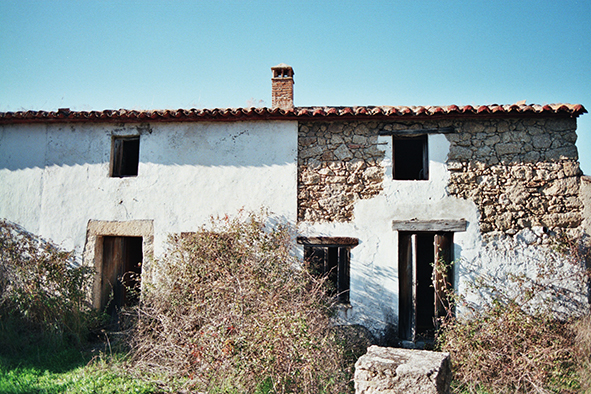
When Gonzalo first arrived in 2014, it was a wild place. It had been abandoned since 2003. A forest fire had completely scorched the surroundings and the owner had fled. The place had become radically undome-sticated. Brambles grew, flowers and weeds bloomed, and La Negra and its surroundings welcomed only the animals and insects.
The elements set about dismantling La Negra – no running water, no power, no windows and no doors. And worse, no real roof. When Gonzalo first came, he camped inside the house with only his dogs, to keep him company. For a time, he would cook on a portable gas stove and wash in the ice-cold waters of the Rio Sever. After his first month, it rained for two weeks straight. Water came through the roof and ran down the stairs and started climbing up the walls.
Gonzalo had no prior experience of living like this. He had grown tired of city life and came looking for a different sort of retirement. He studied the intricacies of self-sufficiency. He installed solar panels and brought up a huge generator. He dug a well and installed a pump and a water tank. With only a rake, a strimmer and fire to start with, Gonzalo gradually won his battle against the jungle, although later he came to regret his overzealous purge. It had been a mistake, perhaps, to evict so many of nature’s inhabitants. Now he sought to welcome them back.
I was lucky in my timing. I was the first Workawayer to have a gas heater and a generator in El Molino. Though the January nights were still bitter, I combatted the deep chill with fire. Before bed I would throw a big log into the fire. Going to bed I wore a beanie and my down jacket. I looked more ready for a brisk hike than sleep. For a man used to all the trappings of civilisation like me, this was something quite different.
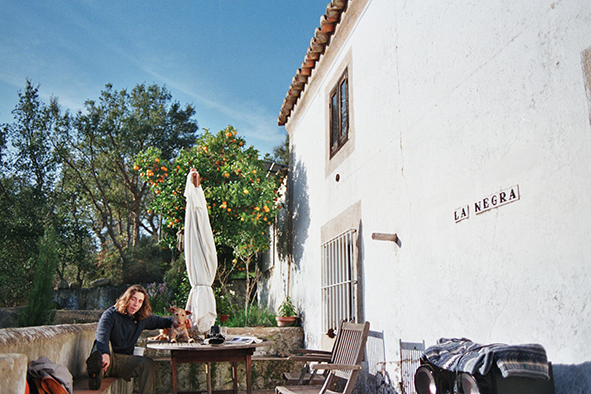
In the evenings Gonzalo would tell me about his life. I listened and always felt I learned something from his ramblings. He has travelled the world and is fluent in six languages and can get by in many others. He taught me many things: from fine wine tasting to fire making to the importance of posture. When I first arrived, I was often slouched with my hands in my pockets. He trained it out of me. He often gave me Mr Miyagi-like tasks. He had me peeling and de-pipping grapes with a knife. It was a fiddly process, but it did produce a lovely pudding. We ate like kings during my stay. Delicious cheeses and meats from the nearby village. And of course, bread and wine with everything.
Though Gonzalo chooses to live in solitude, he is not a lonely man. Every day he talks to his many friends and family from around the world through Skype. His wife lives in Madrid as she’s not ready to retire. He often goes there to see her and get a little dose of civilization.
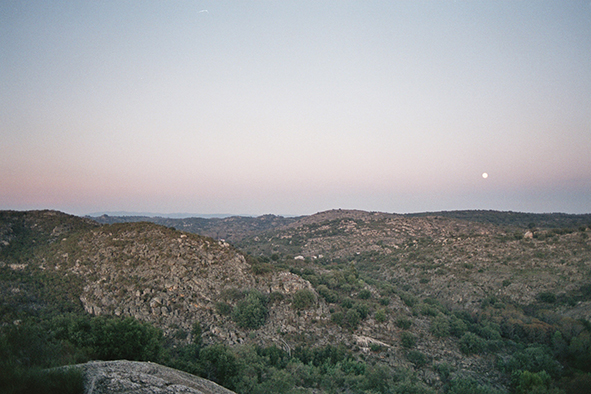
The work at La Negra was physical: clearing fringe-land and uprooting dead trees and snapping wood into piles. It was repetitive yet meditative. No sounds but the birds and the river. For once my mind was free-range, away from the hustle and bustle. After work I would sit in the bitterly cold pond, fed with streams from the surrounding hills. Then lunch would begin, always a mighty affair and we would leave full to the brim. Gonzalo would go off for a siesta, while I would roam into the surrounding hills, armed with moleskine and pen, writing away until sunset. Back inside the walls of El Molino, I would start a fire and sit by it, reading or playing the guitar.

In the evenings I would go up to the house for a late snack and find Gonzalo watching snooker. He still enjoyed many of the benefits of modern life. And that would be a day. A wonderful day and one that was done again and again.
Gonzalo has truly managed to carve out his own little corner of the world. Not a total rejection of the noisy world but a substantial declaration of independence. Something the rest of us struggle to do, caught up in the invisible tangles of technology and the demands of urban life. Maybe I’m wrong but it seems that many young people – and probably older ones too – are interested in this sort of departure from the frazzled norm. We’ve not all had our brains turned to mush. Our attention span can be longer than two seconds. Maybe in the years to come, more people will go looking for their own La Negra.
I hope so.
• To find out more about Workaway, visit www.workaway.info/en/hostlist/europe/gb
We hope you have enjoyed reading this article. The future of our volunteer led, non-profit publication would be far more secure with the aid of a small donation. You can also support local journalism by becoming a friend of HIP. It only takes a minute and we would be very grateful.

Leave a Reply