
A Journey Into Activism
JILL KAYE moved down from London to St. Leonards 16 years ago and loves living so close to the sea. She used to run a gardening business and then a plant nursery but has now stopped work and is eagerly awaiting her state pension! She has an allotment and enjoys walking and sea swimming in summer – when the water’s clean enough!

In April, as a brand-new member of Extinction Rebellion, I took part in The Big One, the four-day protest in London, alongside tens of thousands of others who are frustrated by the Government’s woefully inadequate response to the climate crisis.
The decision to join XR had taken a while: according to the mainstream media they were trouble-makers and extremists. While I sympathised with their concerns and admired their courage in taking to the streets, I felt uncomfortable about their disruptive tactics. I was not prepared to glue myself to the pavement or get arrested.
But my anxiety had been increasing the more I heard about the environmental crises we’re facing. Apart from donating to Greenpeace, signing online petitions and fretting to friends who felt the same way, I had done very little to make a difference. I felt powerless and inadequate.
JOINING XR
Then I heard about The Big One and read about XR’s switch to non-confrontational tactics so I started exploring their website. I was impressed by the clear presentation of the facts behind climate change, and the positive solutions available. Clearly a lot of time and thought had gone into planning the event. The first of their two key demands – no new oil and gas licences to be granted – was a no-brainer; the second was less clear – the setting up of citizens assemblies, but I liked their motto: ‘Unite to Survive’ – this was all about reaching out to other groups sharing similar concerns. They were working closely with the police to ensure the whole event passed off peacefully and would not disrupt the London Marathon on the Sunday. This all sounded totally reasonable as well as inspiring, and I wanted to be a part of it. I signed up for the first two days – my first step towards positive action.
I also joined the local Hastings XR group and met a few members on the train to London. Among them was Grace, a seasoned activist who was sceptical about the current change of tactics; Jane, wearing a white coat to show her status as a scientist; La, a worried grandmother of five in her late eighties who had been arrested three times; and Jaen, who disappeared into the Ladies at Charing Cross and emerged transformed into the spirit of spring in a long flowing robe decorated with XR logos and bees and wearing a garland of foliage round her head.
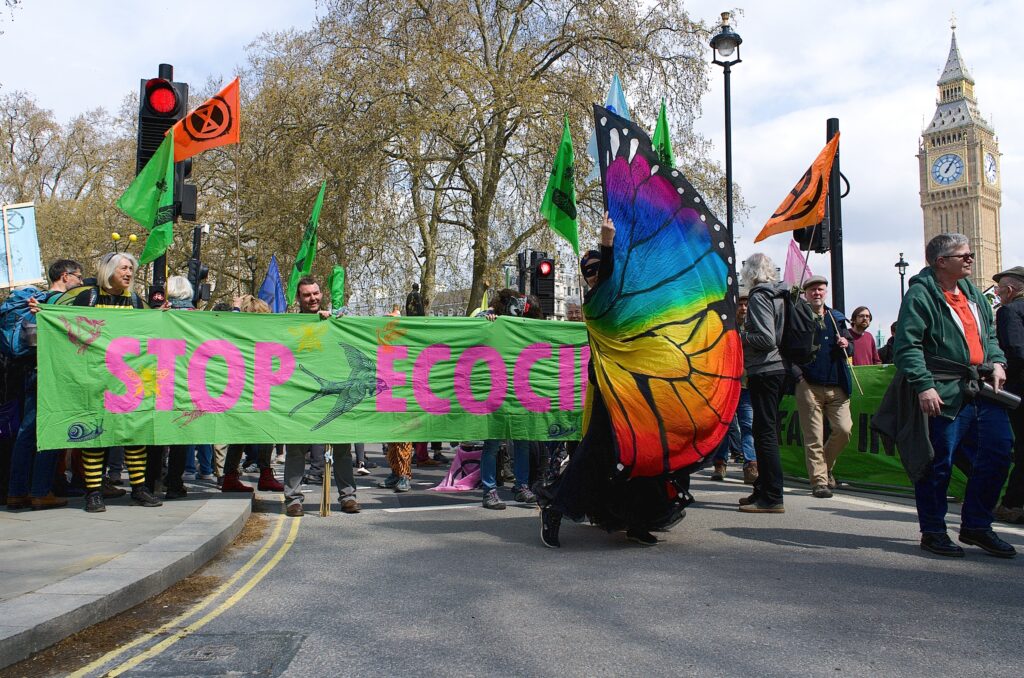
THE BIG ONE
Westminster had been turned into a cross between a street festival and pop-up open-air learning forum. 200 different organisations and loose coalitions were there: big players such as Greenpeace and Friends of the Earth but also trade unions and faith groups, health workers and teachers, grandparents and elders, pacifists and climate scientists. Various Hubs under headings such as Education, Health and Science offered a space where speakers and experts shared their knowledge about the impacts of climate change. There were drummers, singers, processions, stalls bedecked with bunting, and people of all ages and ethnicities learning and connecting. And in the background, Big Ben struck the hours, a solemn reminder that this is the heart of power and that time is running out.
I listened to impassioned speakers at the Writers’ Corner, including Zadie Smith, Ben Okri and others who are using the power of their pens to change hearts and minds. Some of the speeches and poetry moved me to tears or anger.
Later I took part in an experimental Citizens Assembly – an alternative system to the way power has traditionally been held, in which ordinary people would collaborate and work towards finding solutions to the problems faced by our society.
At the Families Hub, young children were encouraged to draw pictures inspired by nature or listen to stories and play games focussed on animals.
The sudden appearance of the Red Rebels spread a hush through the crowd: almost biblical in their apocalyptic full-length red robes and head-dresses, with death-whitened faces and unsmiling scarlet lips, they processed silently, their arms held out in supplication or despair.
On the main stage, a series of inspiring speakers delivered their messages of hope and anger, each one stressing the urgency of their particular cause: Animal Rising calling for an end to the exploitation of animals; Stop Cambo fighting proposals to open up a huge new oil field in the North Sea; the Land Workers’ Alliance working towards a better food system and use of land; a Professor of Entomology highlighting the vital importance of insects; and Chris Packham, the wildlife TV presenter and hero to many, who urged each person to step up their actions to help protect our planet before it’s too late.

EARTH DAY
The main event of Saturday was the biodiversity march to mark Earth Day, an annual global event which started in 1970 and marked the beginning of the modern environmental movement. Tens of thousands of people coalesced into an enormous slow-moving snake which wove its way along a circular route from Parliament Square, passing austere government buildings and completely taking over the main roads normally choked with traffic.
I was bowled over with the imagination, creativity and humour evident in the amazing costumes and masks of animals, birds and insects. Colourful flags were carried high above the heads of the crowd and long banners supported by many hands stretched across the width of the road. And all the way there was drumming and chanting. I had had no time to make a banner or a costume but I bore aloft a ‘tree’ – a large branch hurriedly lopped off one of the shrubs in my garden before I left home.
The march ended with a mass die-in to represent all the species lost and facing extinction. Everyone lay down in the road for ten minutes of silence apart from the sound of multiple bird songs downloaded and played on thousands of mobile phones.
MEDIA BIAS
This was an overwhelmingly positive experience for me – I found it uplifting, sobering, inspiring, informative. Due to the months of hard work leading up to and during the event, there was no trouble throughout the entire four days. So it was disappointing to see that it attracted scant media attention: as a happy, peaceful event, it didn’t hit the headlines. I have never before experienced first-hand the negative bias in most of our news coverage.
THE AFTERMATH
Following the event, I started a journey of discovery, exploring issues sparked off over those two days and filling gaps in my knowledge. The XR website is a rich source of information and support, offering talks and training on many subjects. Joining XR is not just about direct action: there are countless ways that everyone can contribute whatever their skills or knowledge.
CARING ABOUT THE PLANET
And far from being intimidating, I’ve found all the members in my local group are supportive and friendly. XR is a broad church which embraces people from different backgrounds and political opinions. While it is founded on principles of inclusivity and kindness, there is no ideology to sign up to. The one thing members agree on is that change is needed, and fast. These are ordinary people who care deeply about the future of our planet and have stepped up to try to make a difference.
Contact Hastings and St Leonards Xtinction Rebellion xrhsl.org/contact
We hope you have enjoyed reading this article. The future of our volunteer led, non-profit publication would be far more secure with the aid of a small donation. You can also support local journalism by becoming a friend of HIP. It only takes a minute and we would be very grateful.


Brilliant record of people balancing the agenda, thank you.