
Zalktis
JUSTIN MORENO
The beautiful, gold-collared natrix natrix is a symbol of power and prosperity. Snakes are often reviled, but in Baltic lore, the presence of a grass snake or zalktis in a homestead shows that the farm is in good condition. The zalktis gives protection and is welcomed. It is harmless to humans, loves to live by the water’s edge eating frogs and small prey. And Zalktis is the title of Jude Montague’s first art documentary film, a feature-length exploration of her ancestral journey into forests and ancient meadows.
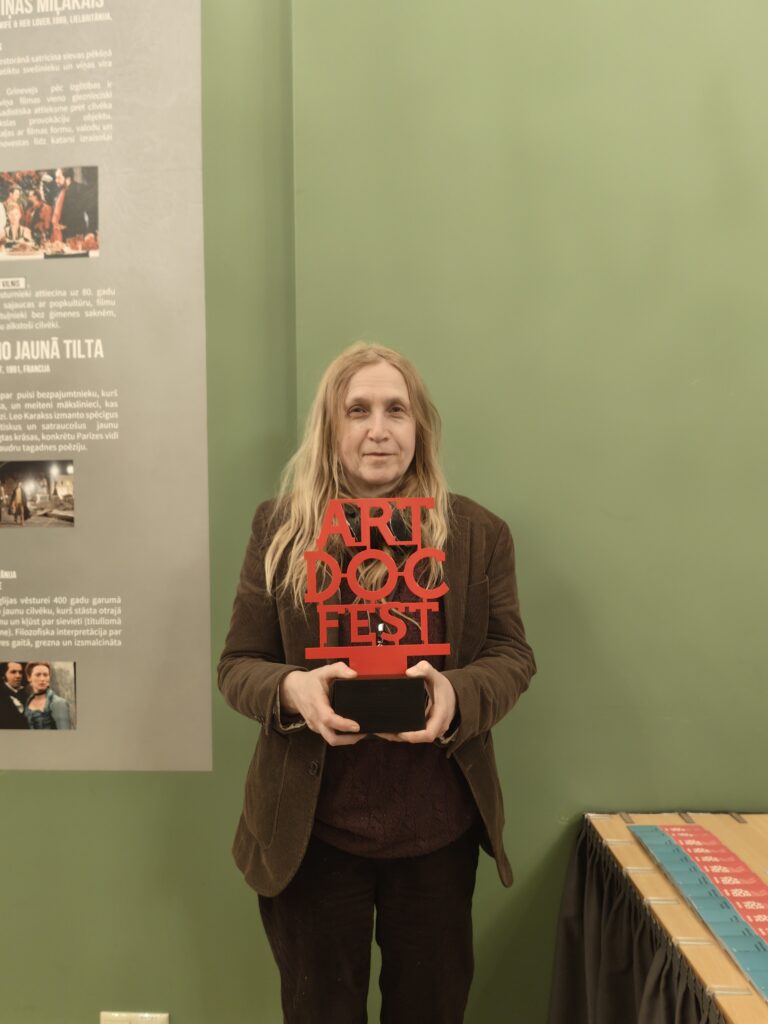
With a sea-faring ancestor that came from Old Prussia to Scotland, and a father who was fascinated by travelling across the Iron Curtain into Soviet lands, Jude has made a film which follows the mysterious slithering creature into a land of folklore. The zalktis leads her on a trip to make connections with forgotten stories. The film is a homecoming, a search for family origins. It was made in midsummer 2025 with Wolfgang Dubieniec.
For many years, the mythology of Latvia has fascinated Montague. She has been learning and singing Latvian folk poetry, dainas, collected by Krišjānis Barons in the nineteenth century. The traditional singing was even then dying out, but 217,996 were published. Short, four-line verses celebrate the seasons, family life, and an ancient pantheon: the goddess of fate or Laima; the solar deity Saule, and the lunar god of the soldiers, Meness. Laima, in particular, captured her poet’s imagination.
“When I found out about the sun goddess, it was as if the world turned on its head for me. She lit up ancient ways. I fell in love with the dainas, the old verses. I believe they are a window which gives us a glimpse into how we did things in Europe before Christianity. Rituals, trees, horses, bees, stones and birds are clearly very important. Being quietly in nature, forest bathing and the communal gatherings of midsummer are still part of Latvian culture. The film is also about larger-than-life figures who remind me of my father, who was a real character and a historian, always on the lookout for an entertaining story.”
The Art Documentary Festival takes place annually in Riga. In March 2026, Zalktis ends the programme on the final day, at the Zuzeum, which houses the largest private art collection in Latvia.
The film opens in Montague’s workshop at 15 Kings Road, St Leonards-on-Sea. One of her band’s songs, Vins, appears in the film. It is about the long-ago sailor with a star tattoo on his hand who came from the Baltics to Scotland. The band also play Anglo-Baltic Electro-Folk on the first Tuesday of every month at Adventures in Pop at the Jenny Lind.
Zalktis was supported by a DYCP (Developing Your Creative Practice) grant from ACE (Arts Council of England). The folk band is simply called after the surnames of the members: Montague Armstrong Rippengal.
We hope you have enjoyed reading this article. The future of our volunteer led, non-profit publication would be far more secure with the aid of a small donation. You can also support local journalism by becoming a friend of HIP. It only takes a minute and we would be very grateful.

Leave a Reply