
Spirit in the Mass
Gareth Stevens reviews the Soutine | Kossoff exhibition currently running at Hastings Contemporary and argues that it is a ‘must see’ show.
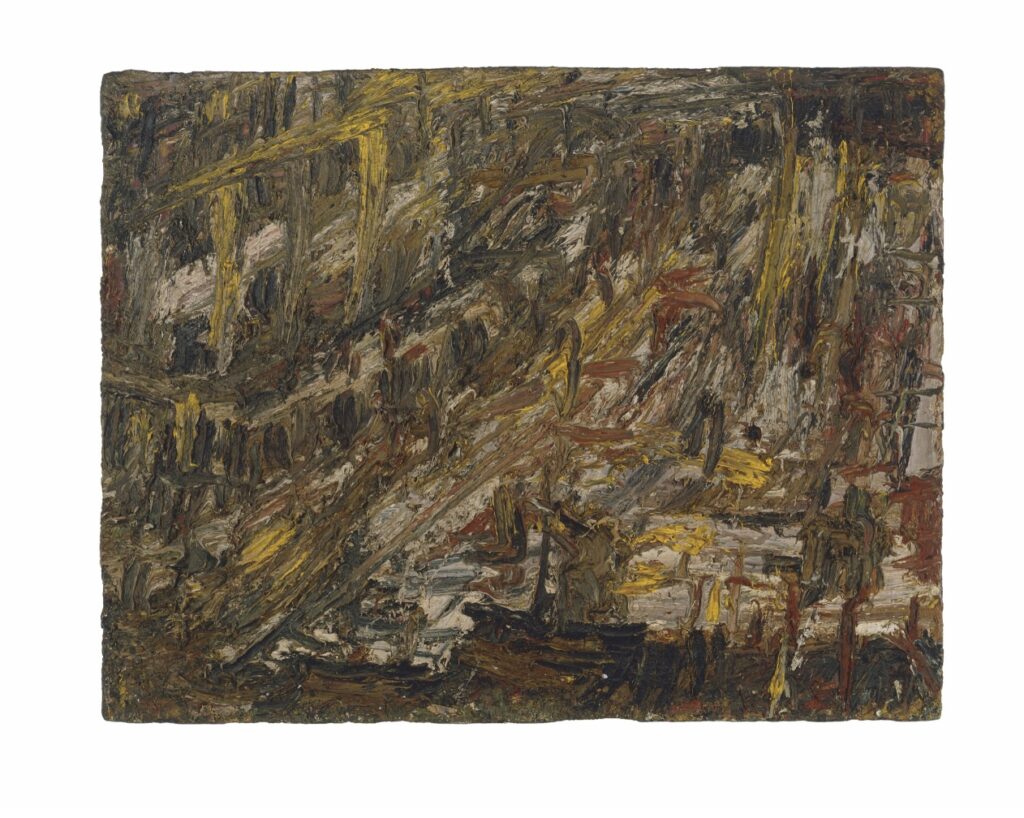
In its most significant exhibition since its inauguration, Hastings Contemporary has pulled off a coup. Superbly curated by James Russell, Soutine | Kossoff invites us to compare and contrast two of the most intense and influential 20th-century painters in a quite remarkable and enlightening way. This is the first time both painters’ work has been shown together. More than that, Soutine’s paintings have not been hung together in such numbers in the UK since 1982.
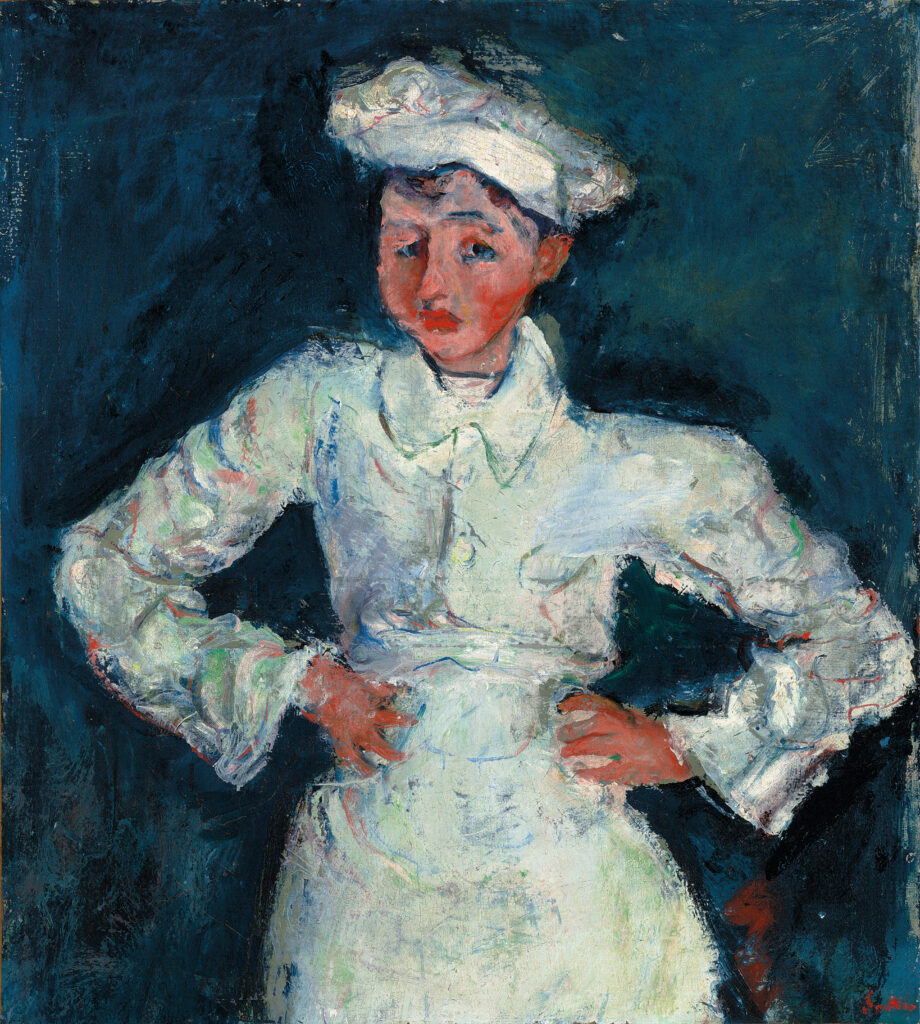
Chaïm Soutine (1893 – 1943) and Leon Kossoff (1926 – 2019) were bound by both their intensely expressionistic use of paint and – most importantly – by the fiercely independent and defiantly unconventional attitude they brought to their practice.
Soutine migrated to Paris from his childhood home in Belarus when he was a young man. Kossoff’s parents moved to London from Ukraine to escape anti-Semitism. Although sharing an Eastern European Jewish heritage, no explicit references to this percolate to the surface of their respective paintings.
Whilst they were both enraptured by the later, more freely rendered, paintings of Rembrandt van Rijn, neither was closely linked to a group of artists stylistically.
A Hitherto Unseen Vision
In the first room of the exhibition, there is an array of landscapes Soutine produced whilst in Céret in the eastern Pyrenees. Having moved to Paris in 1912 he had become part of the immigrant artistic community in Montparnasse and befriended Modigliani with whom he journeyed south to Céret in 1918. Returning a year later, the savagely expressive paintings he produced there attracted the interest of an American dealer who purchased over fifty of them. This is how his distinctive form of expressionism had such a profound influence on Abstract Expressionist painters such as De Kooning and British painters such as Auerbach, Bacon and Kossoff in subsequent decades.

It is clear that, whilst Soutine had undoubtedly been aware of painters like Van Gogh and Cezanne, he was driven by a highly personal, hitherto unseen, vision. It was never enough for him to faithfully represent what his eyes told him was in front of him. In that sense, he deviated from the mission of the Impressionists. He wanted to transcend this technical challenge – to infuse his work with an almost spiritual dimension that would bring landscapes into a visceral reality that insists we respond emotionally.
In these landscapes buildings, trees and the earth itself writhe together in contorted vortices that remind us of the work of Russian painter Marc Chagall and testify that the whole world around us is alive with spirit and movement. Swerving Chagall’s preoccupation with creating almost hallucinogenic representations of myth and allegory, Soutine’s work tells us that the divine is all around us and that we just need to amplify our awe of nature itself to fully appreciate it. The stories he tells go beyond the need for narrative.
In the next room, there are several large paintings from Kossoff. The way that this exhibition is laid out is truly marvellous. Rather than interspersing the works of the two painters throughout the space, each room either holds the work of one or the work of the other. By searching out both the similarities and differences between the works of both artists, it becomes easier to more deeply appreciate and understand what each was striving for.
Muscular and Convulsive surfaces
Kossoff was a true Londoner. Growing up in the East End, before being evacuated in 1939 to Norfolk, he returned to study at St Martin’s after the war and became enraptured by his visits to bomb sites and observed the restitutive building that was never far from them. After relocating to North London in 1961 he became increasingly interested in railway landscapes as well.
Unlike Soutine landscapes – of which he was undoubtedly aware – Kossoff’s were unframed, much larger and painted on board. Exhaustively worked and reworked, it is impossible to view these paintings without being aware of the artist’s movements whilst he ‘sculpted’ his renowned muscular and convulsive surfaces. Kossoff’s use of impasto makes each work more like a relief – they are objects that mutinously reject the traditional notion of the ‘picture plane’. As with Soutine’s landscapes, the conventional perspective is ignored. Kossoff didn’t want to create images of what he saw – he wanted to commune with the experience of observing…. to get inside the subject and reveal its ethereal innards.
One of the keystone works of Kossoff’s exhibited in the show is a large painting of public swimming baths in Willesden, North London. Painted in 1971 it is often lauded by many as one of his most accomplished works. However, it lacks the profundity of his other paintings. The colour is rather pallid and the brushwork rather underworked and, dare I say it, clumsy. I suspect the reason why it has become so well known is that it tangentially references other styles of art such as Vorticism and even Cubism.

Ragged Sincerity and Insight
During the 1950s, Kossoff was taught by David Bomberg who urged him to ‘find the spirit in the mass’. This is the closest clue to understanding what drove the artist. ‘Head Leaning on Hand’ (1959), Kossoff’s first painting of Wolf, his father, is one of the most powerful works in this show and indicates just how impactful Bomberg’s mantra had been for him. Thick swathes of paint swirl and lap against each other to create a tumultuous surface that incredibly shows a profound, yet intuitive, understanding of the head’s form. And so, perhaps this work’s greatest achievement is that it seamlessly melds abstraction and figuration. Adhering to the modernist thesis, it is undoubtedly made from paint, indeed it is experimental in the way it explores what paint is capable of doing if it is pushed, smeared and layered with heartfelt gestures. On the other hand, it is an overwhelmingly authentic depiction of a human head. The human presence is articulated with ragged sincerity and insight.
Doleful and Arresting
Soutine’s portraits are a delight. “Le petit pâtissier’ (1927) is a painting I became aware of decades ago when I was an undergraduate and so dispensing with distant objectivity for a minute, I was thrilled to see it for the first time. Demonstrably a homage to Rembrandt’s ‘Self-Portrait with Two Circles’ (the subject’s white hat recalls that worn by Rembrandt in this work), it is a deeply sensitive portrait. The pâtissier’s heavy-lidded eyes are doleful and arresting. His hands grip his slender hips with agitated force and his dislocated left shoulder tells of a youngster under pressure – who needs to get back to the pass. His chef’s whites are rendered with flicks of rainbow colours and give a fidgetiness that adds energy to this empathetic work. But it is his gaze which holds us. It is hard not to notice that Soutine’s portraits, at times, reduce their subjects to being doll-like. I am still struggling to understand this.
This is an astounding exhibition that has all the pedigree of the best London shows. Beyond the indisputable beauty of the paintings, Soutine | Kossoff shows us the power of astute and sensitive curation. Well done James and well done Hastings Contemporary.
Soutine | Kossoff runs until 24 September 2023. For more information go to hastingscontemporary.org
We hope you have enjoyed reading this article. The future of our volunteer led, non-profit publication would be far more secure with the aid of a small donation. You can also support local journalism by becoming a friend of HIP. It only takes a minute and we would be very grateful.

Leave a Reply