
Fell: The Horror
ELIZABETH ALLEN
Fell, ‘freely adapted’ from Anne Bronte’s The Tenant of Wildfell Hall, is a dramatic work which challenges both the audience and the actors. Writer and director Frances Viner has cut away the novel’s softening social satire and emotional tenderness to concentrate on its core: the horrors of the marriage of the idealistic and optimistic Helen to the depraved, alcoholic Huntingdon.
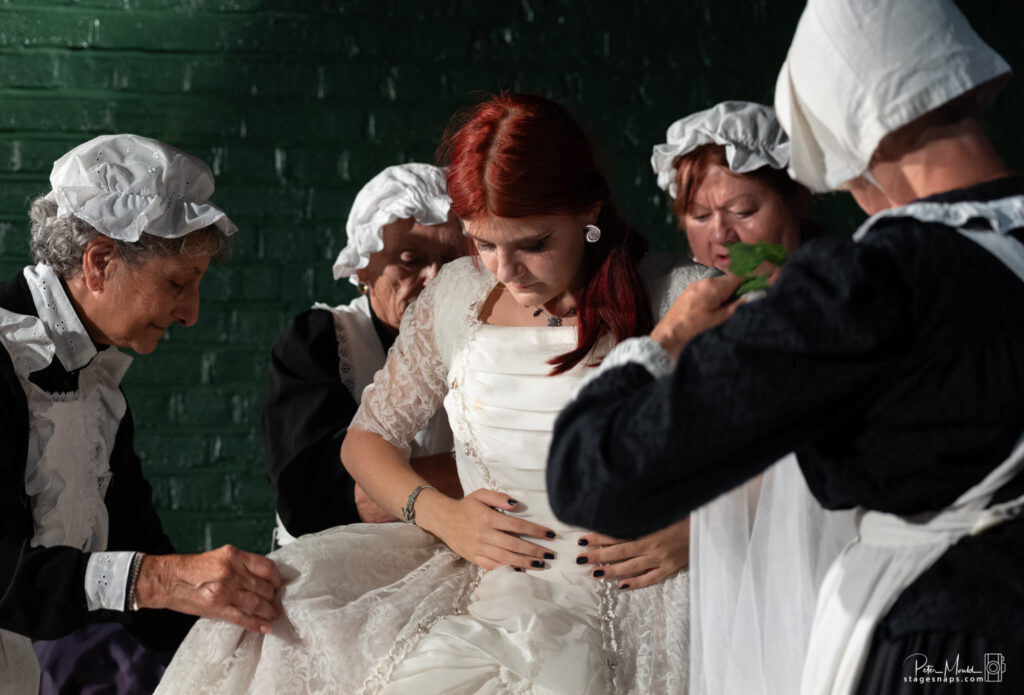
This is a short play, running only for fifty minutes, but it demands concentration for every one of those minutes.The language does not pretend to be plausibly ‘realistic’ but is rich, dense with metaphor. The weight and colour of the costumes, put on and cast off, are significant.The movements of the players as they dance, embrace, witness or refuse to witness, are stylised and call for a high level of collaboration among the actors.
The enclosed space of the Stables Studio enhances the intensity. Years of attending plays in the back rooms of pubs make me no stranger to the up-close-and-personal possibilities of theatre. I remember handfuls of tripe thrown into my lap. And in the more Establishment setting of Stratford’s Other Place, a King Lear in which a sexy Edmund stroked the faces of young women in the front row. Well, it was the 1970s. But in Fell the violence of Huntingdon to Helen, while stylised, was deeply disturbing and to be taken seriously. The other characters refused to witness, turned their faces to the wall. The point was made.
Language and movement make great demands on the cast too and their commitment and accomplishment were outstanding. The servants, significantly titled ‘housekeepers’, have an important level of narrative control. Ginny Beaumont, Kaye Gabriel, Pauleen McLaughlin, Sophie Schoenkrecht and Lou Whalan, with Lawry Rhodes as butler, frame the story, negotiating introduction and epilogue, witness and comment. Richart van Zyl’s violin music added to the emotional charge. Milo Ward as Helen, packed into layer upon layer of confining wedding clothes, demonstrated in her movements the terrible shift from lightness and love to terror and repulsion. First impressions suggested that Henry Smalldon looked too young and innocent to convey Huntingdon’s cruelty and depravity but by the end he certainly frightened me. Which, of course, makes another serious point.
We hope you have enjoyed reading this article. The future of our volunteer led, non-profit publication would be far more secure with the aid of a small donation. You can also support local journalism by becoming a friend of HIP. It only takes a minute and we would be very grateful.


Leave a Reply