
Love on the way
St Leonards photographer meets partner hiking Spain’s Camino de Santiago – Part 2
In Part 1 (HIP issue 174, 16th April), we heard about the allure of the Camino for Stef Frimmer, an executive assistant from Munich in Germany, and Lester Hill, a props master and photographer living in
St Leonards-on-Sea, and how fate brought them together. In Part 2 their adventure continues and we find out how the hike – and Covid-19 – changed their lives forever… By Martin Dickie
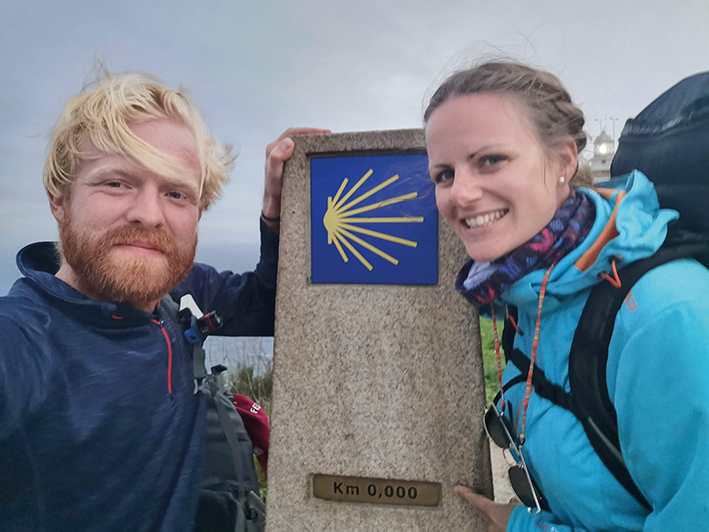
Arrival Cape Finisterre
All pictures: Lester Hill
What were your highlights of the trip?
Stef: Our Camino family. These were complete strangers who soon became our family. Never before have we experienced so much helpfulness and openness as on the Camino. We had profound conversations with people we had only known for a few days and were able to listen to moving life stories.
Lester: Then there’s the small town of Molinaseca. After a long downhill descent from Cruz de Ferro, the highest point on the Camino, you stumble across a beautiful town, which has an old church behind a crisp blue river, with restaurants and bars on the waterfront, and an old Roman bridge to cross over. We had planned to walk another 10km that day, but neither of us could get over the town, so we split from our group and stayed. That was the first evening that just the two of us spent together.
Stef: There’s also Cape Finisterre – known as ‘the end of the world’. Throughout the Camino there are stone pillars telling you how many kilometres you are from the end. Seeing the signpost with ‘0.0 km’ at Cape Finisterre and realising that you’ve reached the end after 900km is incredible. After walking through so many different landscapes, from dry plains, vast cities and rainy mountains, then to overlook the ocean, with no land in sight – it really does feel like the edge of the world.
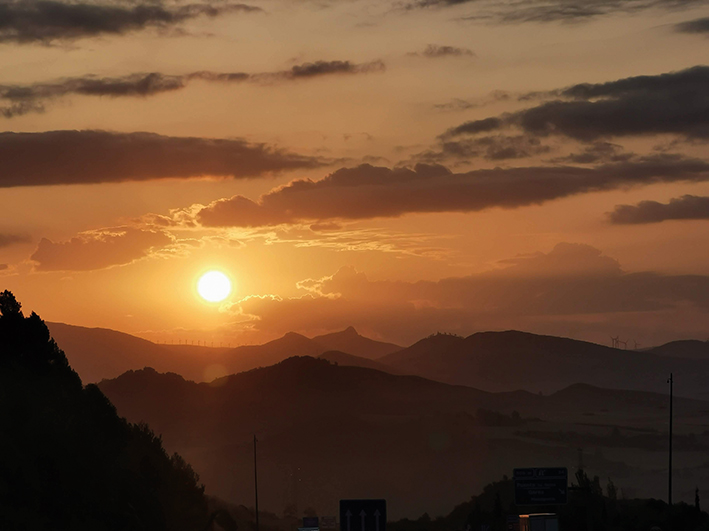
Sunrise
What were the biggest obstacles to completing the journey?
Stef: Your own ego. It can often get in the way. For example, your body signals that you need a break – blisters on your feet, back pain, tiredness – but you ignore it because you think “I haven’t walked that far today” or “I’ve only been walking for a few days” or even because you want to keep up with others. It takes a while until you realise it’s not about the finish line, it’s the journey to it. Leaving the ego behind and focusing on yourself is a big challenge.
Lester: Don’t forget the ‘danger flops’. This was the nickname given to my flip-flops, which were an essential item for resting feet in the evening after a long day of hiking. But I somehow managed to injure myself quite frequently in mine, including breaking my little toe on a large rock, and having to put it back into place myself in the bathroom, and attempting to fix it in place with what I could find in my backpack. I also managed to step into and fall down an open storm drain, but this could also be blamed on the Spanish wine that had been consumed that evening.

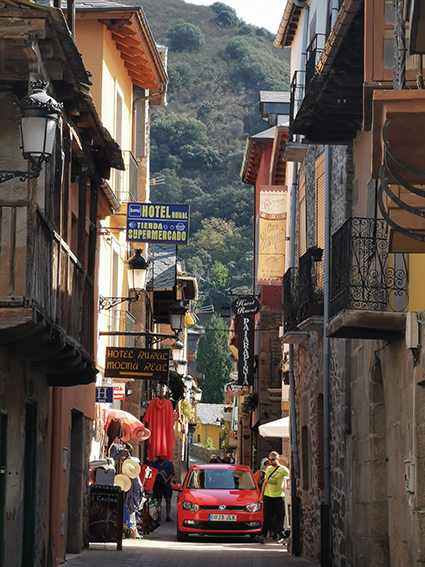
Molinaseca
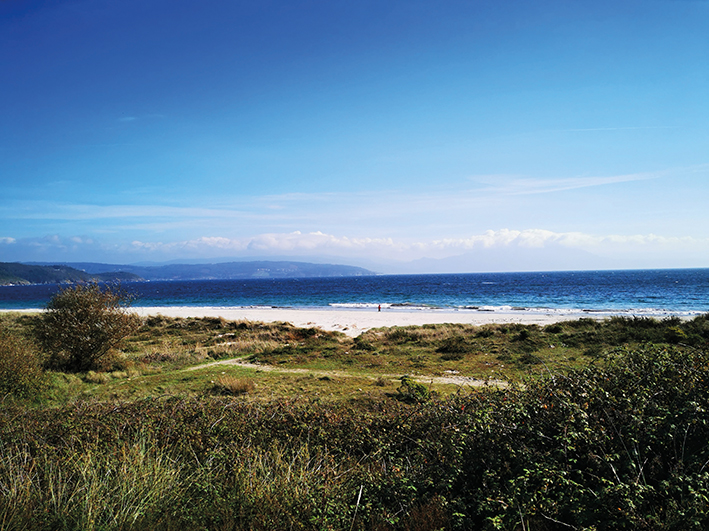
Finisterre
How long did it take you to complete the pilgrimage?
Lester: It took us six weeks, but we took our time. Most people can complete the Camino in around 35 days. We realised after a few weeks that neither of us had a flight booked back, and we wanted our Camino to last as long as possible.
Stef: When we finally arrived at Cape Finisterre, we had mixed feelings. On the one hand we were happy and proud that we’d made it. On the other hand you’re sad that it’s over. You don’t know what to do with yourself the next day. Walking around 25km a day exhausted us physically, but the days spent together were the happiest we’d been in years.
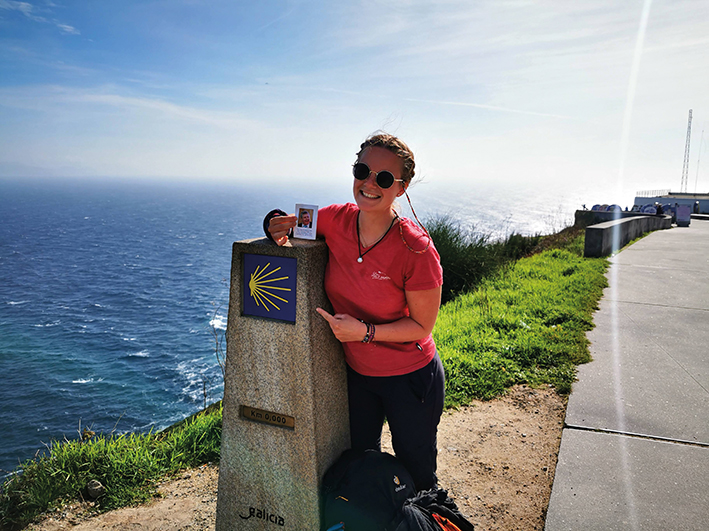
Stef with her Dad, Cape Finisterre
What happened after the Camino?
Lester: We both realised we didn’t want to go back to our old lives, to old habits. We wanted change. Nevertheless, we both went back to our separate countries. Stef started working for another company, I went back to working in film. After flying back and forth to see each other, we realised that we really missed Spain, and neither of us liked the long distance. So we booked flights back to Spain to find a place to live. Stef had flown over to London for a weekend, from where we planned to fly to Spain – but then the lockdown hit.
Stef: So I was stuck in England, and we spent the first lockdown together. With Brexit getting closer and the lockdown continuing, we realised that Spain might not happen like we’d planned. Lester’s mum was already living in St Leonards, so we knew the area quite well. After weighing it all up, we decided this was the place we wanted to be. I gave up my flat and my job in Munich and emigrated to England.
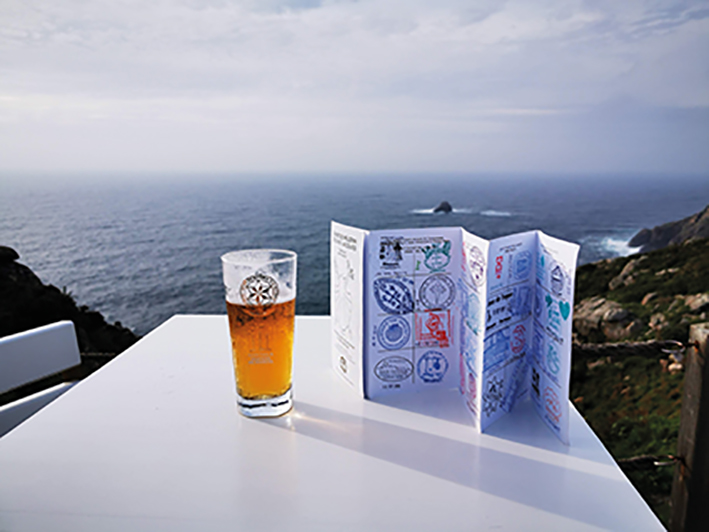
Pilgrim Passport
• Now based in St Leonards, Stef has started retraining as a life coach. You can follow her on Instagram @steffi.frimmer.

• During the Camino Lester rediscovered his love of photography. All of the photos in this article were taken by him. Back in the UK he bought a newer camera and went out to take photos every spare minute, which led him to starting @stleonardsstreets
We hope you have enjoyed reading this article. The future of our volunteer led, non-profit publication would be far more secure with the aid of a small donation. You can also support local journalism by becoming a friend of HIP. It only takes a minute and we would be very grateful.

Leave a Reply